
Recently published:
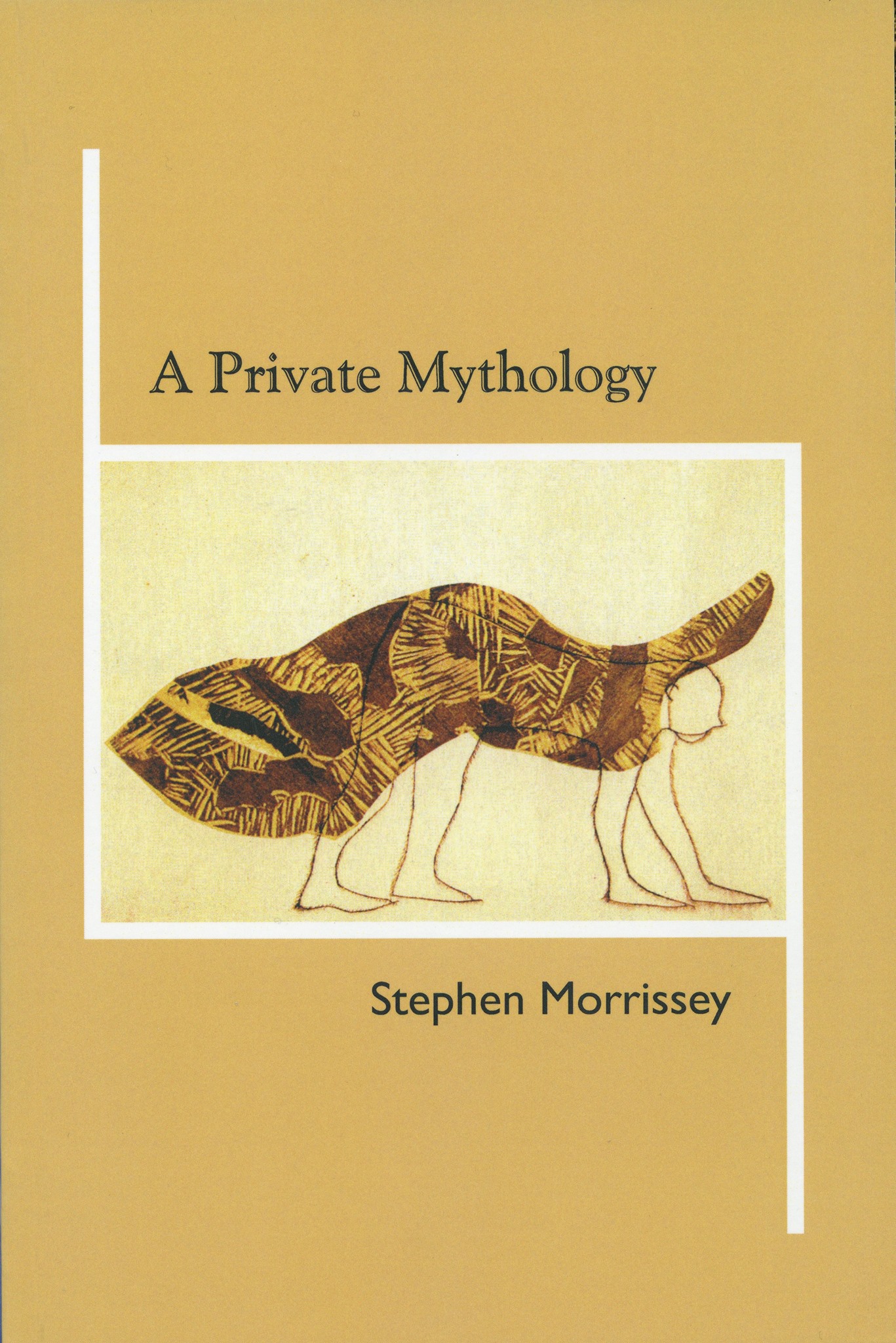
A Private Mythology
Articles & Reviews
Review of four poetry books
Reviewed in this article:
Lize Stilma, Portraits
Oakville: Mosaic Press, 1986
96 pp., $8.95
Ludwig Zeller, The Marble Head and other poems
Oakville: Mosaic Press, 1986
96pp., $9.95
Christopher Levenson, Arriving at Night
Oakville: Mosaic Press, 1986
80pp., $8.95.
Seymour Mayne, Children of Abel
Oakville: Mosaic Press. 1986
80 pp., $8.95
Review by Stephen Morrissey
Poetry Canada Review
vol. 9, no. 1, fall 1987
Lize Stilma's Portraits (translated from Dutch) contain some of the most moving poems I have read in a long time. These are not technically perfect poems, many border on prose, but all strongly sustain the reader's interest throughout the book.
Each of Stilma's portraits is of a mentally handicapped person with whom she has worked—perhaps as a social worker. These are direct statements made with little sentimentality about the condition of those unwanted people. Her portraits disturb the reader's stereotyped idea of what it means to be mentally handicapped: those whose mental distress is not caused by their condition are made to feel like exiles by "normal" society.
In "Something Like That..." Stilma writes:
Adrian is there too.
Together with his mother.
His vision it very limited.
That's why he bends his head down a bit,
as if he is trying to pull things closer
to him.
His legs don't move the way he wants
and intends them to.
And his saliva sometimes runs a bit too
quickly for him.
Those who have eyes to see will see
beautiful, wavy hair.
Blond, with a wonderful shine to it.
And his hands have an aristocratic shape.
As if he only engages in delicate acts.
. . . .
A shopper watches him with great irritation.
His calmness disturbs her.
He blocks her fast-moving filled-with-
merchandise shopping cart.
She decides who Adrian belongs to.
A woman with the same blond hair.
The mother, quite likely.
She's the one to complain to.
And so she says to Adrian's mother:
"You don't take something like that to
the store on a Saturday afternoon."
She points to Adrian.
The mother says nothing.
Besides slowing her tempo for the sake of
her son, she has learned something else.
To be silent.
Stilma's book contains examples of episodes of the greatest insensitivity to the mentally handicapped. I read these poems with an insatiable curiosity to know more about these people who, because of what we label mental limitations, sometimes perform acts and make statements of great saintliness. Each portrait is evidence of the human will to live despite the individual's condition. After years of physical and mental abuse these poor souls are still capable of compassion that one seldom finds elsewhere.
From Portraits we learn that the human condition is the same for all people; mentally handicapped or not, we all suffer, experience fear, joy, anxiety and so on. Perhaps we distance ourselves from the handicapped because we don't want to acknowledge their pure and uninhibited expression of our deepest feelings, if we did acknowledge this common bond we might have to look deeper into ourselves, and this is a frightening prospect. As Lize Stilma writes:
How tenderly two people can be in tune when one wants to give pure goodness to the other. When one wants to meet the depth of the other.
Ludwig Zeller's best poems in The Marble Head and other poems (translated from Spanish) are those that use surrealistic images to illuminate a recognizable reality. For instance, in "Ear-clock":
My father took a clock apart and its two
halves spread
On the white tablecloth those multiple
wheels cut like the ears
Of the mechanical monster howling in
secret as it crosses
The spheres where the face of minutes
and hours laughs.
The diabolical parts were never pieced
together again
And time ran freely there in my
childhood.
In "The White Pheasant" he writes:
All it quiet here. An we mere ghosts
forgotten
In a grey house where no one calls? Is
anyone listening to us?
Wind ii erasing the traces on the show.
Aren't you
The While Pheasant, and are your eyes
the ones that gaze at me in dreams?
Certain surrealistic writing techniques can be used effectively by all writers; the exploration of dream imagery helps to explain something of the individual's condition in the modern world. This condition is often one of isolation and exile. However, as with some surrealistic poetry, the images at times may seem too easy to write. Then these explorations of the subconscious mind, the land of dreams, become merely theatrical and silly. But this is one of the challenges of writing poetry, to describe what cannot be described in rational terms without risking absurdity. Zeller is also capable of pedestrian lines such as "Destiny irreparably burns its candle at both ends."
In some ways being a surrealistic poet is a misnomer. All serious poets are at least marginally surrealistic at some point in their work. Surrealistic imagery may help to vivify language that is encumbered by convention and formality. Despite this, in The Marble Head, one senses a certain exhaustion, a lack of enthusiasm and freshness of language.
Christopher Levenson's Arriving at Night is impressive for a number of reasons. These are mostly well crafted poems; but skill in writing is not enough to produce great poetry. Levenson's work impresses because of the meditative quality of his work. In "Double exposure" he gives two views of the same scene: the first is of a harbour in England during the war, the second stanza is of the same harbour but he finds "the village shelved,/ encased in the estuary's museum light..." The emotional vitality of his wartime childhood, even though it may have been a time of fear, seems more real, more alive, than life as it has become many years later. In "Where We Came From" he writes of,
... our communal loneliness, our lives
so exposed to empty space we must fill it all
with words, with memories.
The Canadian landscape, for Levenson, seems to have an almost spiritual effect on the individual; "to such a landscape/ we are required to be honest, nothing can hide."
Perhaps the finest poem in this collection, and the poem that should have been the title poem, is "The Cavern." This is a long poem in memory of Pat Lowther. It is the meditative summation of Levenson's poetic search. He writes:
Or do we come on it suddenly,
the contours of our death, as a pot-holer
climbing down a narrow chimney, confronts
at a corner of rock the glistening face of failure
and, listening to the drum of his blood, is
suddenly reckless?
Our childhood dreams drift steadily into the dark,
the heart's distant reserve. The past is everywhere,
the past is immediate. When everything else
has been explored, here is the only remaining heartland,
the one impending silence...
Levenson concludes the poem:
Through love we discover
what it is we have to say while the day light still lingers:
it is all in counterpoise, our satisfaction,
we ascend like tracer flares, marking a wreck
in the vast ocean of being: it is transience
that makes our love endure, for in due time
the household of death will bid me also welcome.
There are many fine poems in Arriving at Night. Perhaps Levenson could be faulted for being overly controlled and conservative in his writing, but at his best his work communicates a quality of reflection and inner awareness.
The book is divided into three sections and there are weak poems that could be eliminated from each section. I would prefer a shorter book, perhaps two-thirds of what Levenson has published; it would be a much tighter book thematically and only the strongest work would remain.
Here is the best poem in Seymour Mayne's Children of Abel:
"Hiroshima: Drawing by Survivor"
How is it these flies survived
the enormous flashing sunlight that burst
pod of skin, bone and speech?
Mayne is at his best in his minimal, sharply concise poems. This form is very difficult for it requires that the poet's consciousness be crystal clear. To perceive the world with a haiku-like simplicity is not the work of the poetaster, but of the most accomplished poet.
Mayne's work, unfortunately, seems trite when he writes what are essentially ethnic poems. Poets have more important work than the ethnic dimension; they must help create the culture of the future, not merely celebrate any specific race or culture.
Children of Abel is divided into three sections and it is the second of these, Simple Ceremony, that is the most interesting. These are short prose-poem; reminiscing about the poet's youth but also describing something of his current life. "Cairns" is particularly good:
Stones roll out of the corners of my eyes
I should be crying, not building cairns of grief
with this rubble of words.
The short, concise, and yet emotionally charged poem is one of Mayne's accomplishments: examples of concise imagery are also found in his longer poems such as "The Great Synagogue" and "Crazy Leonithas." There is the germ of a very good book of poetry in Children of Abel but the book is padded with some poems that may be good in themselves but might better have been excluded from this work.
Copyright © 2007 The author