
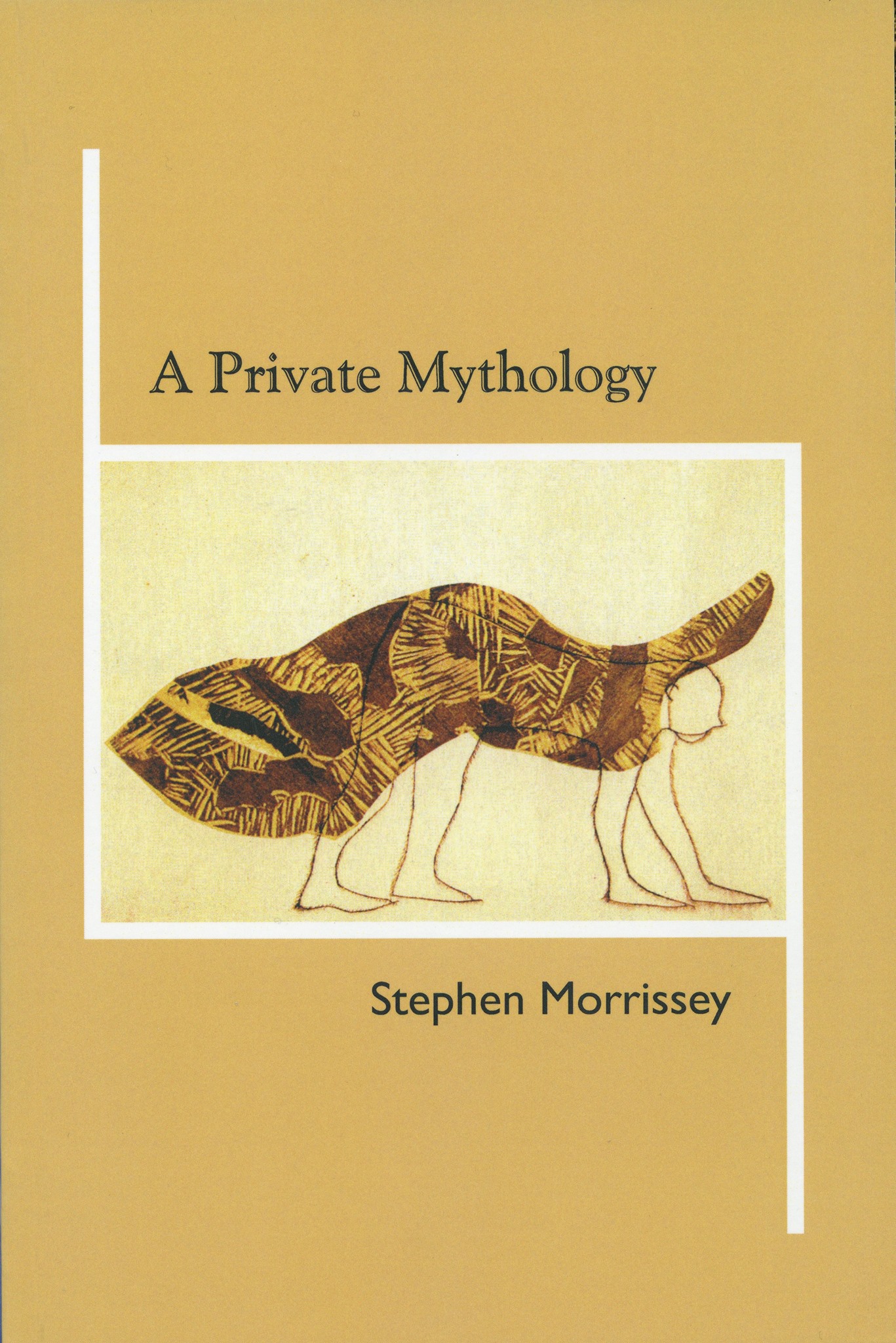
Recently published:
A Private Mythology
Articles & Reviews
Review of four poetry books
Swimming Alone, Patricia Keeney
Ottawa: Oberon Press, 1988
96 pages, $10.95
Paradise Garage, Michael Estok
Frcdericton: Fiddlehead Poetry Books and Goose Lane Editions, 1987
72 pages, unpriced
Fathers Never Leave You, Richard Harrison
Oakville: Mosaic Press, 1987
68 pages, $8.95
If Summer Had A Knife, Beverley Daurio
Toronto: Wolsak and Wynn, 1987
71 pages, $8.00
Review By Stephen Morrissey
Poetry Canada CHRONICLE
Volume 10, No. 1, spring 1989
Patricia Keeney's poems in Swimming Alone describe her experiences in a new relationship after the "bust up" of her "fifteen-year-old model marriage." The reviewer's problem in discussing Keeney's highly confessional work is in differentiating between Keeney's skill as a writer, and expressing an opinion about the details revealed in the work.
Keeney's poetry is a mixture of undisciplined writing and well crafted passages. At her worst Keeney's poetry is adolescent and naive:
Today we're in the valleys of love
on the smooth green floor between peaks
their shadows meeting over us like blessing.
. . . .
You have never been so rich and beautiful
a rainbow lifted over prison walls
On a measured band joining water and light,
noonfire's strung out recounting its beauty
Keeney's vision of life centers on romantic and sexual love; this would not be a problem except that her language is often not from the heart but stylized and artificial. Some of her poems seem more concerned with projecting an image of herself than with revealing truth.
Consider, as an example, her reference to The Story of O, the famous French pornographic novel. In "Roissy" she mentions,
looking for O's chateau
the one she arrived at with buttocks
squeakily bare on backseat leatherette
the one in which she wore
loose red velvet, the white flesh glistening
for whips and kisses
. . . your boiling imagination expects all this
Keeney fails to make any moral statement regarding the degradation and humiliation O experiences; her use of this image is flippant, and reveals a somewhat narrow self-absorption just below the surface of many of these poems.
Inevitably Keeney's love poems turn to disillusionment and despair; she encounters her lover's changing feelings towards her:
You look at me from an ice-age, your eyes
coded, reptilian.
. . . .
Just because I refused to carry your newspaper
get black ink over the vinyl insides
of my handbag, you exploded . . .
Had I torn the damned journal into a thousand pieces
before your face, the way I wanted
we'd have killed each other
To Keeney, life's meaning seems to lie in having a sexual partner, not in being self reliant or self aware. Maggie, the hero of Ethel Wilson's excellent novel Swamp Angel, leaves a corrupt marriage and finds self-sufficiency in her own being. Keeney ought to read Wilson's novel, especially where Maggie says: "Now I am alone and, like a swimmer, I have to make my way on my own power. Swimming is like living, it is done alone." Keeney is holding back from swimming alone.
Michael Estok's poems in Paradise Garage show his ability to under-stand and communicate the complexities of relationships and feelings. In "Subversive Acts" he writes:
You asked me to call you again
(because you wanted to trick me ...
What led my finger
to your number?
What if I said it
was that I wanted to
talk, explain things.
Teach you all the lies I know and ways
to hide in the skin's
intricate ways.
Estok's poems are deceptively simple; he has obviously worked long and hard on these poems and yet they come across as having been written without much effort. In places he uses cliches ("wind/. .. empties the mind clean/ as a bone") but these are easily forgiven because of the overall sincerity of his work. An emotionally moving poem has the virtue of transcending a few elements of bad craft. Estok doesn't try to shock the reader; if anything he is too conservative in his approach to writing. One poem does shock, but it is appropriate here and allows us some insight into the origin of other poems in the book. In "Birthday Call to my Sister" he writes:
because it's Daddy coming home now
up the farmhouse attic stairs, and
his hand falls open on a scream
no one hears for telephone-pole miles,
because what never happened
always will—
and I'll kill you if you tell.
Michael Estok's poetry is personal and articulate; he is a poet we should hear more from in the future.
Richard Harrison's poetry in Fathers Never Leave You centers on the family and its various relationships. Harrison's central theme deals with the experience of being a stepfather and the difficulties this carries with it. There is always the biological father that the children refer to and to whom they still feel loyal. This is a book of the 1980s, about divided, broken families. It is these poems about being a stepfather that are Harrison's most successful In 'The Other Father is Always There" Harrison writes:
The other father is always there.
You cannot turn his sons against him
because you cannot turn them against themselves.
You love them.
You love their voices
even when they are angry,
you even love their scorn
though it is the edge of a blade
because you will remember it
and you've heard it before
from your own mouth.
You will live with them for years
but time is never enough,
the emotions never pure,
never purge. The other father,
you reach for him in your angry visions.
You touch the window,
the print of your hand hangs
unconnected in the light.
He is not there,
apart. Always
in another house.
You have no way in.
While Harrison's message is unequivocal, his poetic voice is still developing. At times his poetry becomes prose; for instance, he writes in "Stepfamily":
No one expects
his own height or eye colour from me.
It is a love based only on speaking together,
making sense, for a moment, of a game
or a TV show or an assignment for school.
It is love across the distance between families.
Despite the urgency of Harrison's poetry, he still needs to be careful not to pass over poetic experience in favour of prose statement. Otherwise this is a very good first book.
Beverley Daurio's If Summer Had a Knife contains the most sophisticated and satisfying poetry of all the books reviewed here. In this book Daurio explores memory and relationship, and articulates her experience of being in the world in a way that makes it accessible to the reader. These are not poems that require only one reading; Daurio's poetry stands up well to many readings.
"Every Freedom" describes Daurio's memories of her mother's funeral. She writes:
every freedom has its price
and this is mine:
to see her like a doll undressed
and staring in the snow
to look along the road
at the cars of our funeral caravan,
following my mother to Orillia.
she drifts ahead.
call her up, i want to say,
join hands and drag her spirit from the hearse.
an approaching storm
streams rain across our faces.
Here Daurio expresses genuine emotion, spoken directly from the heart. Daurio has a good sense of what makes a poem work; in ÒTo the Library" she lists a number of observations she has made of people and notes specific details about them. Her perceptions are an epiphanous insight into her life; she writes:
a blue chev pulls into the parking lot and the guy
says to the woman with him get out but he's
kidding her they're play fighting they both
have bags of film cans stretch the canvas and
she says if you love me so much why am i
carrying these
The strangers she observes represent one of her own relationships, but made more objective because of the detached quality of the perception. It is part of the poetic experience to invest meaning in all things; the world is not a meaningless place where random events threaten our existence. Daurio communicates this observation in her listing of various perceptions; meaning asserts itself as part of the act of perceiving. In "Taking the Tagged Dog to the Supermarket" she writes:
i smooth your shirt against your shoulders
push the hair out of your eyes
the dog howls at me
you say
your job is more meaningless than my job
you say
the moon has no light of its own
you are so warm
i move away
It is the moving emotion and human element that distinguish Beverley Daurio's poetry; our awareness grows more acute as we read her work. Daurio is a talented poet whose work deserves a wide readership.
Copyright © 2007 The author