
Recently published:
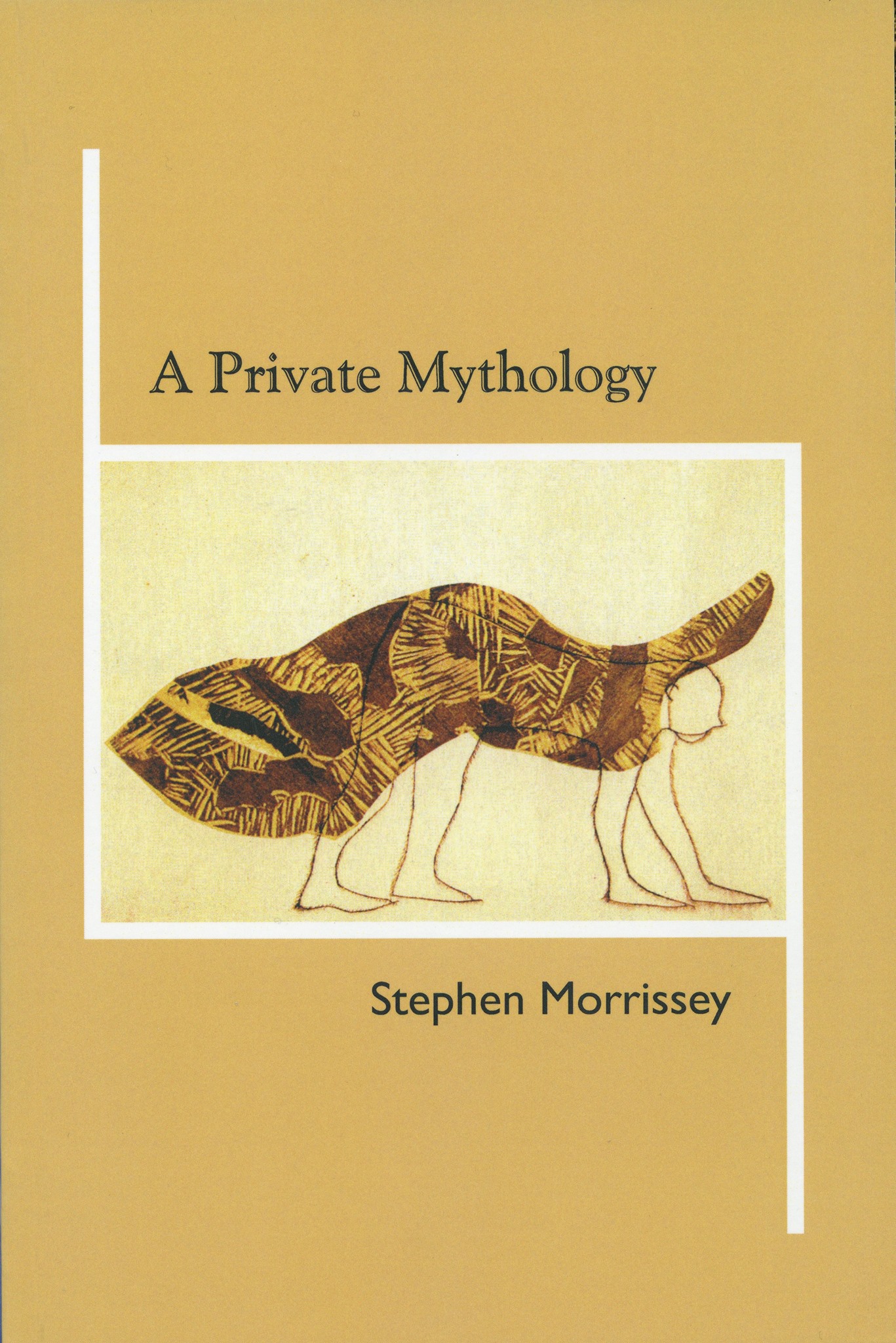
A Private Mythology
Articles & Reviews
Review of John Newlove's The Night the Dog Smiled
The Night the Dog Smiled
John Newlove
Toronto: ECW Press, 1986
Review by Stephen Morrissey
Poetry Canada Review
Spring 1987, Volume 8, Numbers 2 & 3
John Newlove's The Night the Dog Smiled is the rich voice of experience deeply perceived. His perceptions, however, are often heavy with the odour of defeat; in Blakeian terms he is caught in the world of experience, of unhappiness. Newlove writes:
There is
a good side to life, though
not right now, specifically. Though the stars
continue to shine in some places and the flowers
continue to bloom in some places
and people do not starve in some places
and there are no wars in some places
and there are no slaves in some places
and in some places people love each other,
they say. Though I don't know where.
They say
I don't want to be sad. Help me not to know.
And in another poem:
And the world flows
still flows. Even in these worn-out days,
worn-out terms.
This is a poet who celebrates life, but with qualifications, with a hesitation born of his own separateness from the world. How does a reader approach such a writer? His hesitations, his doubts, his anxiety, are all our own. As thinking and feeling human beings we must all share Newlove's apprehension that life has become increasingly ignoble.
In our modern age we have given up on objective reality. This is the message of the physicists; William Barrett writes that Heisenberg's Principle of Indeterminancy "shows that there are essential limits to our ability to know and predict states of affairs, and opens up to us a glimpse of nature that may at bottom be irrational and chaotic..." (Irrational Man) Thus, art is no more than the mirroring of the consciousness of the artist. Barrett maintains that "the artist has the clearest eyes to see." Newlove writes:
This whole civilization is noise
we are not wholly beasts yet
but the politicians roar at us
until civilization is minor
And we are surrounded by liars
so that when the poet that is in us says
we are surrounded by liars
he is called a liar
or is given prizes, liar
obligations
I must agree with Newlove, "civilization is noise", or seems to be; our contemporary society is an assault on the senses and spirit of anyone who has not been dulled by its excessive materialism. But I object to the aura of defeat that pervades much of this book. Temperamentally, I am not pessimistic and probably Newlove isn't either; he writes, in "Notes to Rosenblatt", "a punch in the guts of pessimists!" Nevertheless, there is pessimism in Newlove's work. In "Return Train" he writes:
A low, empty-
looking, unpainted house;
back of it, the corn
blighted, the tractor
abandoned.
In his writings Aldous Huxley pointed out that consciousness acts as a filter to our perceptions, selecting and editing what we are aware of and what values we project onto our perceptions. All truth, then, must be subjective for the divided self. Is there another mode of perception that transcends the filters placed on consciousness? That is, can we go beyond our preconceptions?
What saves Newlove from total despair is his sense of humour, for some of his poems can be very funny; in "Dried-Out Insects" he writes:
The turtles in Sorestad's bathroom
have beautiful markings
but look vicious.
*
Meanwhile, like wives,
they waver in the water,
beautiful and vicious.
We can know something of a person's inner being through their use of language. Not only what a person says reveals something about them, their use of language is also revealing. In "Toronto November" Newlove writes:
On the radio this morning
they said that a garbage tuck
had fallen over onto a car. I would have liked
to have seen it. Now the garbage
is falling out of the sky. And when
will those skinny high-priced models in magazines
stop pretending in full colour
that we like this stuff, that we are like
this stuff? God: give me some warmth
for once
and I will then do you the favour
of belief. You cannot exist without me.
In the last poem in this volume he writes:
I'd like to live a slower life.
The weather gets in my words
and I want them dry. Line after line
writes itself on my face, not a grace
of age but wrinkled humour. I laugh
more than I should or more
than anyone should. This it good.
In his quiet, low-keyed way, Newlove is a very funny poet. But it is the laughter of one who knows the depths of despair and self-consciousness. It is not the belly-laugh of one who moves through life with few cares, at home in the world. It is the laughter of one who can write a poem called "The Permanent Tourist Comes Home", but where is home? Home is a psychological state in which he is oppressed by memories of the past:
Wee Willie Winkie, her finger
to her lips, walks in slow motion
on her delicate ankles,
sibilant, saying Shh, shh,
Father's dead.
*
The mountains are bright tonight
outside my window, and passing by.
Awkwardly, I am in love again.
The serious artist must ask if there can be psychological freedom. Can the individual live in this world, and knowing its violence, not be corrupted by it? Can we transcend the world of experience and self-consciousness? We know Blake's answer: "If the doors of perception were cleansed, everything would be seen as it is, infinite." In "The Light of History: This Rhetoric Against That Jargon" Newlove writes:
There is time enough, has been for understanding.
To Hell with. So long as the green Earth grows
and the great stars shine, live on and love each other.
Being is admirable and the graceful trees in the wind
sway in concert with you in this ever deathless world.
"Live on and love each other. Being is admirable... in this ever deathless world." These could be the words of a mystic, someone in close contact with the radiant world of what is, perception unsullied with prejudgements, ideas, traditions, beliefs, or the intervention of thought.
All of the work in The Night the Dog Smiled is of a high order, but it is the long poem, "White Philharmonic Novels" that will be anthologized. This is a curious and difficult poem until one reads it for what it is: a collection of statements held together by the strength of the poet's craft and imagination. "It's necessary to realize that all these phrases / are stolen. The arrangement is all", Newlove writes. The title of the book comes from this poem; it suggests something of the irrational, the impossible in the midst of a life we would believe is rational and orderly. This poem is a collage of words and phrases, a juxtaposition of images and ideas creating an event that has its own order and harmony. The order is an illusion; life doesn't follow any convenient pattern except the artificial one invented by our own minds. "This turbulent ear hears turbulent music, / the poem made up of its parts."
—the strain of the Nutcracker heard
from a radio station on the same frequency
with the countdown
for the first Los Alamos test—
I won't cheapen this book by saying that it is an event in Canadian publishing or that it is so well written that "it hurts" (as I have read on the back covers of other poetry books). Newlove is a poet who is aiming for a bigger vision than many poets are aware exists. The Night the Dog Smiled is not the greatest book of poetry ever published in Canada; however, it has an integrity and quality far surpassing anything found in most books of Canadian poetry, or poetry published anywhere in the English-speaking world.
Copyright © 2007 The author