
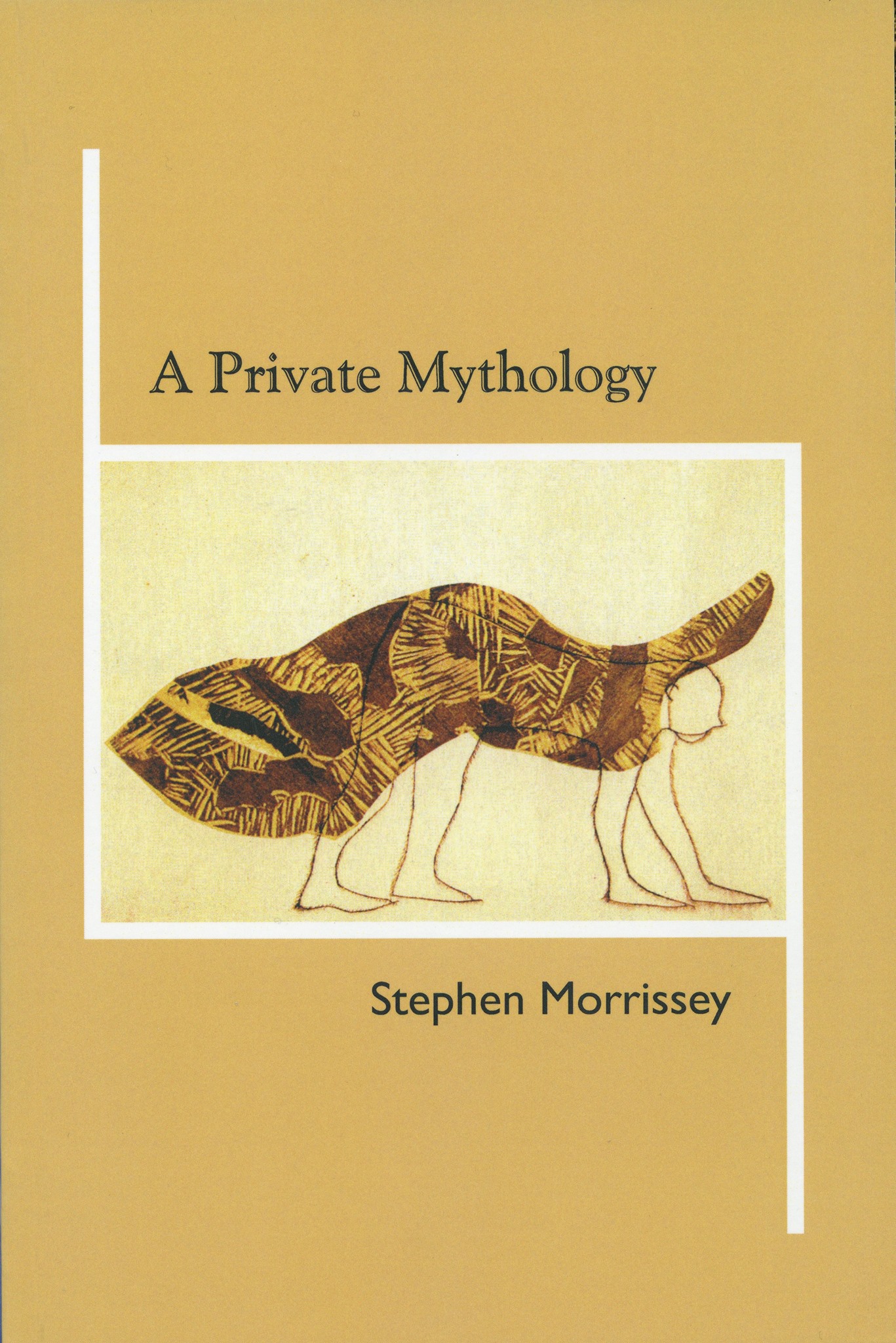
Recently published:
A Private Mythology
Articles & Reviews
Review: A Linen Crow, A Caftan Magpie
A Linen Crow, A Caftan Magpie
Patrick Lane,
Saskatoon: Thistledown Press, 1985
Review by Stephen Morrissey
Poetry Canada Review, Volume 7, No. 1, autumn 1985
In Patrick Lane's A Linen Crow, A Caftan Magpie we are in the presence of real poetry. It is a moving experience, as is the experience of confronting any real art. The book, at first glance, is a single long poem, but the reader then discovers that each of the two line stanzas that make up the book is a separate poem. The book is not a long poem that builds to a climax or significant theme or event; each poem is the culmination of the poet's vision and the reader may dip into these meditations and perhaps see something of his own existence reflected in Lane's words. Like the book's abstract cover painting by Louise Walters, the poems have no one center point of significance and there is no narrative line; these poems are like our daily existence in which any projection of a structured beginning, middle or end, although convenient, is in some ways a fiction of the mind — every moment is meaningful if seen as it really is.
Lane writes that the poems are "a composite of the haiku and ghazal. A resemblance and nothing more, perhaps more oriental and occidental." He is not using language for the sake of impressing the reader, or aggrandizing his ego; rather the language is simple and direct and reveals the austerity of the mind in meditative reflections. Here we touch on what poetry can do when it is written by a good poet; we have the privilege of being allowed to enter the private and personal thinking of a serious person. The fact that the work is art transforms the personal into the impersonal and universal.
Lane writes:
Keep your apples and roses.
East of Eden, the only desert is the mind.
Thinking.
Don't shake your hoary locks at me. I am
still hungry.
Laughter. How the mind works, works,
works.
The plains are a mind thinking slowly.
Art at war with itself, Make my mind
go slow.
The poems seem to move outwards from a deep and reflective center where that which is creative and new may be born. The poems are an act of meditation, an extension of the poet's own life and being. At their best the poems are epiphanies:
Kept in a bamboo cage.
The only purpose is to stay alive.
Desolate. Desolate. The day and the day
and the day.
Remember the heart. Little mole.
Going to be lost and found.
Remembering precisely, minutely, the
record of illusions.
The new world. The anvil. Water in
deep well.
Between your hips the only parasite is me.
Even the landscape of the poems is spare. There is a preoccupation with memory, sex, love, beauty, and desolation. These are all ultimately seen as illusions; still there is no escape from the self that inhabits the poems:
The line is doubtful. The meaning is clear.
Endure.
We remember a boy in wind, a bell in an
open field.
Everything is island. Symbol of failure
and hope.
Violence, they say, as if the word could
ruin them.
The reader feels that there is a real person behind the words; not just words saying what they want, but the poet and his vision in control of his craft:
A mouth in a tree cries forgive, forgive.
Like a body fallen on a bed. A white bed.
A body.
Acting as a refrain throughout the book are the many references to crows, magpies, other birds, flight, beaks, etc. There seems to be a balance between "poverty and song" and "sorrow and song'' in our perception of birds, but they are all tending ultimately towards an affirmation of life in the midst of the desolation that inhabits the poems.
I tried to imagine a linen crow, a
caftan magpie.
I believe I believe.
Let the women have it. Empty tombs.
I grow wings. Outcast at last.
A linen crow. A caftan magpie. Sorrow
and song.
The tree bends under its fruit.
Thus, despite the desolate personal landscape that the poet creates in his work, there is still song, "The tree under its fruit," and it is in this affirmation in the midst of denial that the strength of the poetry can be seen. It is a delicate balance that we must all be aware of.
Copyright © 2007 The author