
Recently published:
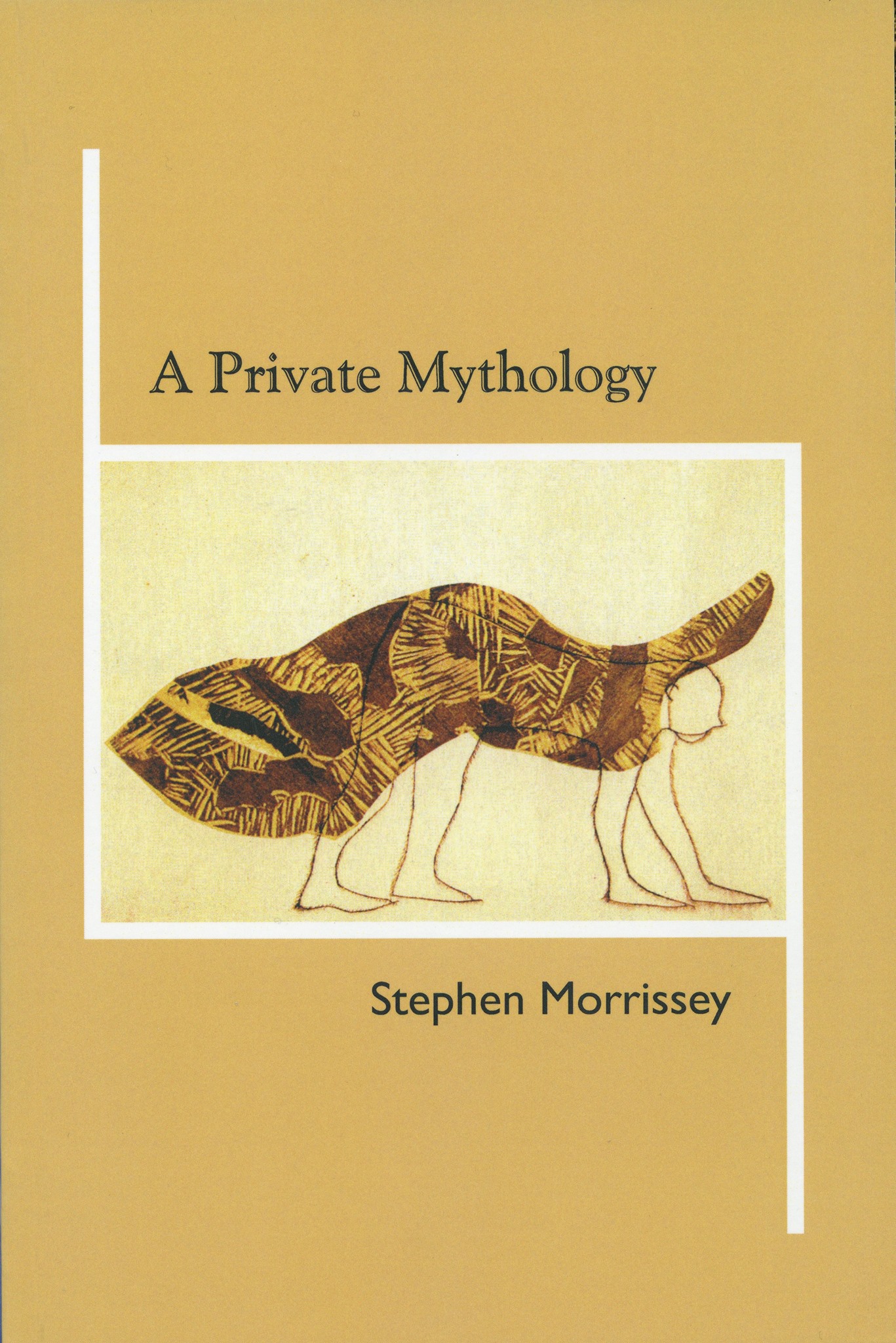
A Private Mythology
Articles & Reviews
Review of Endre Farkas, From Here to Here
Endre Farkas, From Here To Here. The Muses' Company: Ste. Anne de Bellevue, 1982.
unpaginated. Paper $4.00
Review by Stephen Morrissey
Brick 20, winter 1984
In one of the poems from Endre Farkas's new book, From Here To Here, he refers to a friend whose wife died, leaving him "to be father & mother/ and how his pain drove him back to poetry." Farkas then writes:
And I want to tell him yes it is the druids' potion
It hurts, cleanses
is the way
Endre Farkas's From Here To Here is his own statement of pain. There is no death of a mate at the root of the pain, but rather the threat of dissolution of a long term relationship. One enters into this pain and partakes of it. In effect, the poetry is a kind of therapy for the soul. Not therapy in a fashionable or trite way, but the actual exploration of the poet's own consciousness in its investigation of the problem with his existence.
The book begins with a prose poem entitled "...and" which defines the situation and dilemma of the poet, his desire to escape from his life situation:
. . .and I begin here, in the middle of the night, in the middle of a thought and already the pen is running out of ink. Fading words. . . How zen I think. And thinking on how zen I've become since coming back from there, I write on till it runs out
. . .and I flew out there to be away from here: to be there
. . .and I lived in a room and wrote about back here: about a house I did not want, a love I hated and a life that wasn't.
The Zen question that Farkas poses throughout the book is whether or not there is anywhere to escape to. The conclusion suggested by the title of the volume is that there isn't. We must drag the baggage of our existence with us wherever we go. There is no "there," only "here." There is no "later," only "now."
The poem "Locks" attempts to define the relationship in which the poet feels enclosed, not only by the house that he is renovating but also by the whole semblace of responsibility that middle class life, with its emphasis on possessions, demands. The locks he is putting on the doors represent a feeling of enclosure and gathering tension:
In the last two weeks
I have installed two of them to give you a sense of security
To give you a sense of security
I had to rip down baseboards and frames I sweated over,
nailed back, countersunk, plastic wooded and sanded permanent
You felt the need to feel more secure
and I am a victim of your fears
and a loser of keys
and a leaver of keys in locked places
and a forgetter of keys in locks
and of course a non-believer in locks
And when finally somehow done
and working
(the solid sliding klunk bolting)
I am certain that they won't keep anyone out:
in fact, I know they invite forced entry
I know
there is a caged hate in here
and it is silently turning on you
There are a group of shorter poems which fall under the umbrella statement: "no more easy love poems." These poems deal with the process of romantic love which inevitably leads to failure and the dissolution of relationship. Relationship needs more than romance if it is to survive, despite what we are told on television. We must deal with what exists before and after romantic love: that is, with ourselves. In an untitled poem Farkas writes:
I am cruel
I devise acts to hurt you/to move you to pain
What am I supposed to do or say to make it go away
I have backed into detachment
and sit for days watching movements shuffle like victims
carrying their belongings into no man's land
Love's in the garbage
along with all the other suicide notes
While outwardly From Here To Here deals with the poet's life after the temporary collapse of his marriage, what it attempts is to come to grips with unresolved and ambiguous feelings existing in the poet. The breakdown of the marriage is the catalyst for the pain and anguish, hut the poems make it clear that the relationship is only peripheral to the real dilemma presented to us, the real dilemma common to us all: how does the divided person become whole?
Indeed, the outer scenario also involves the poet leaving home, the home become a trap of responsibilities, and going out west to find himself. But this physical distance is also the distance between the narrator and his wife. Again, it is also the distance between Farkas and his own understanding of himself. But where is self-knowledge to be found: there is only "here," whether it is in Ste. Anne de Bellevue; Quebec; or British Columbia.
The final poem in the book sees the narrator return home and in a really humourous way describe how no one was there to meet him,
Due to a mix up, you do not appear. I wait.
You still do not appear. You do not appear. I decide-
to take a limousine.
The door is opened. I step into it: The scribe is alone
in the back stroking the crushed velvet. The scribe is
staring out at stares who wonder who he is. The scribe
leans back and closes his eyes and conjures a poem in which,
to get there, you take all sorts of roads. The chauffeur asks
for directions and the scribe tells him that it is in the poem.
And when we arrive I have to carry my own luggage
This is a difficult poetry to write because it does not seek merely to describe and in no way does it seek to amaze the reader with a lot of obfuscating and witty use of language. The poems are genuine in their honest simplicity. The layers of self-consciousness that some poets juxtapose between their writing and the reader is not present. We are given the bare truth of an experience, as told by one who survived it. It is this quality that makes the book exceptional. This is Endre Farkas's fourth book of poetry and ills his most mature and best work.
My only objection to the book is the cover art by Carole Beaulieu, which has nothing to do with the content of the book as well as not being a very good collage. Even Beaulieu's collages inside From Here To Here are of only minor interest. Unfortunately, this is the way I fed about much of Endre's experimental poetry and performance piece, especially the sound poetry of which there is only one example in this volume. Those self-conscious efforts at entertaining an audience are of little value or consequence compared with the poems in From Here To Here. I hope that he moves into the real understanding of life that these poems display—we will have a really fine poet if he does.
Stephen Morrissey
Huntingdon, Quebec
Copyright © 2007 The author